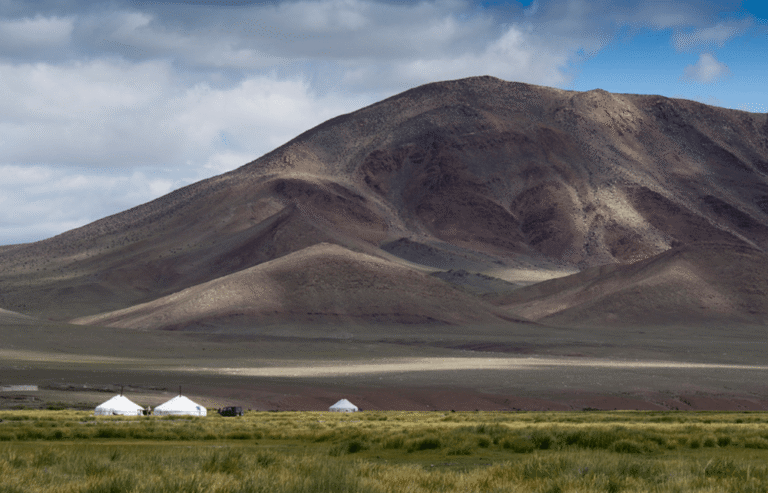
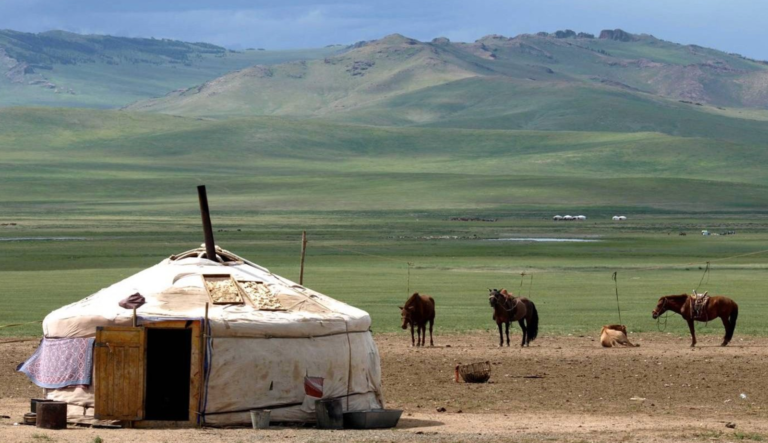
When you think of Mongolia you might not automatically think of swimming in Mongolia. It’s the second largest landlocked country in the world for a start, more than 30% of its landmass is covered by the Gobi Desert – the world’s 5th largest desert and the number of swimming pools outside of the capital city of Ulaanbaatar can be counted on one hand (with all of the fingers left over) and any fresh water lake is frozen hard for at least a third if not more of the year.
This is the surface of Khovsgol Nuur … in the winter. Stunning. But perhaps a little hard to access even for the most hardened of ice swimmers.

But, even though I am based in Mongolia throughout the year, swimming remains an important part of my schedule and fundamental to who I am. Turuu (my business partner) is from the Gobi. He sees water in a completely practical way – accessing the local well for drinking water for the family and the livestock. Yet, he understands this desire I have to swim – the first question always asked is ‘Boss, you swim?’, knowing that if I’m swimming then everything is OK with the world.
I have always loved swimming – especially when it is outdoors and ‘wilder’. Swimming outdoors is about feeling alive. It’s exhilarating. It’s refreshing. It’s invigorating. And frequently cold. I don’t always get in though … sometimes a slate grey sky can abruptly remove any motivation that I had.
But, here in Mongolia, I mainly swim at the municipal pool in Ulaanbaatar. And yes, my laps of the pool may seem like the most boring thing imaginable. But, I swim for the feeling of freedom in the water and here in Ulaanbaatar that means swimming at the municipal pool. Not only can I still find that feeling of freedom but I find the rhythm (and ‘mindfulness’) of lengths in a public swimming pool help me mentally.
Not that I’m a competitive or particularly fast swimmer. Oh no! But, running my own business in a country and culture that is not my own is by far the hardest thing I have ever done. And those lengths of the pool that I try to grab 4-5 times a week are like my medicine. Yes, I know there are the health benefits (although I might have to ditch my addiction to a slice of chocolate mousse cake after the swim) but being immersed in water is a great stress reducer. It allows me to take time out from my emails, to escape reality and to switch off from the rest of the world.
And as naff as it might sound, I also see correlations between the traditional values of swimming and the reality of running a business – that with effort it is possible to achieve. And the deep breathes you take in swimming or in a stressful business situation keep you calm.
So, yes. Swimming lengths in a municipal pool in Mongolia’a capital city might not be on the list of every business owner but without it I would be lost. And that’s right where I’m heading now … potentially followed by a slice of that chocolate mousse cake.