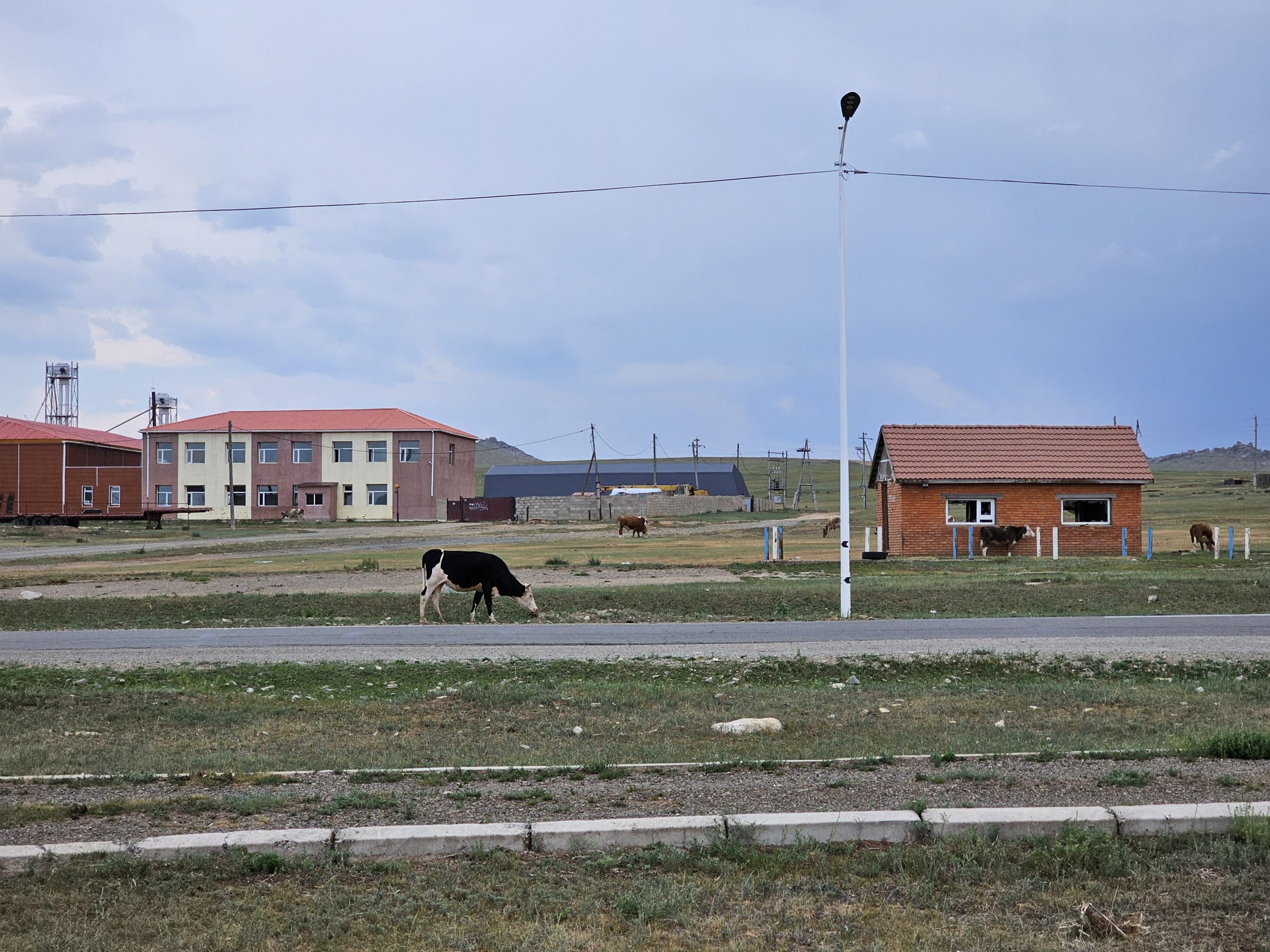
There are places in Mongolia that everyone knows before they arrive. The Gobi. Khövsgöl. Kharkhorin. The Altai. And then there are places like Öndörkhan.
It probably wasn’t on anyone’s list of must-see places in Mongolia when we arrived there on a cold Saturday evening. It was simply where we were at the end of a journey through eastern Mongolia.
At the time, the town was still called Öndörkhan. It was renamed Chinggis in late 2013, reflecting its location in Khentii Province, the region most closely associated with Chinggis Khan.
I still think of it as Öndörkhan, though, because that is what it was called when we were there.
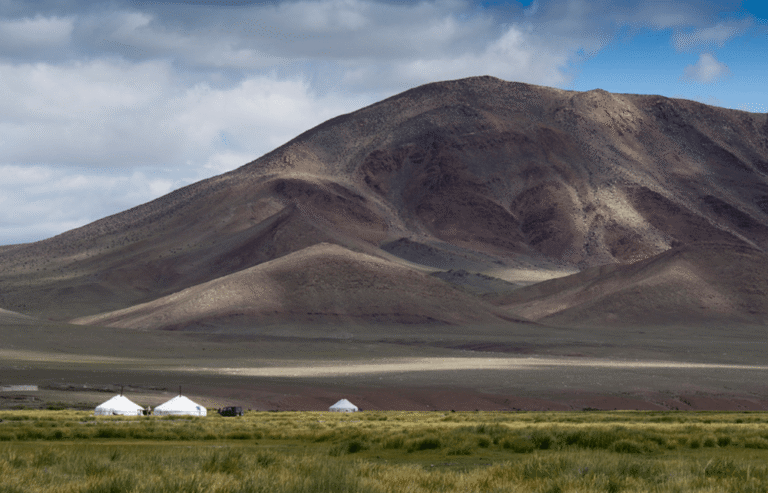
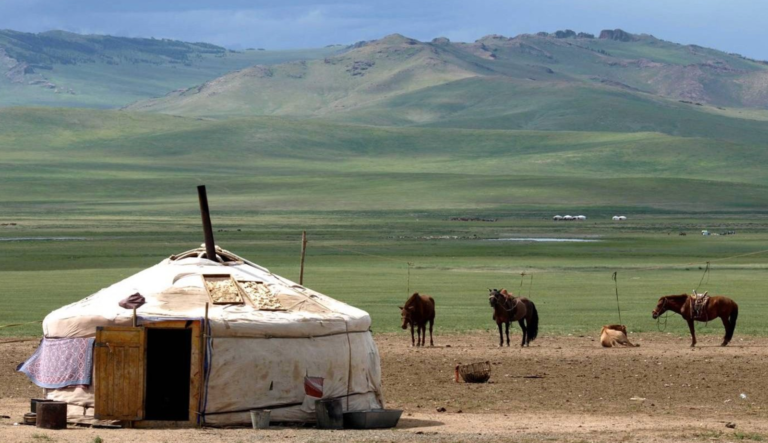
Khentii carries a lot of historical weight. This is the landscape of the upper Onon and Kherlen rivers, the forest steppe and open grasslands associated with the early life of Chinggis Khan and the origins of the Mongol Empire.
But Öndörkhan itself is not a grand historical destination. It is a provincial town. And I have always rather liked Mongolia’s provincial towns. They break up the scale of the country. After days travelling through open steppe, a town means pavements, shops, apartment blocks, traffic, children on bikes and people going about ordinary daily life.
It can also mean a hot shower. In the earlier years of Eternal Landscapes, that often meant heading to the local public shower house. It still can. But, these days there are more hotels with en-suite rooms, which perhaps removes a little of the adventure but is undeniably welcome after several days on the road. As long as the showers are working of course.
Öndörkhan also has one of those provincial museums that I have developed a great affection for over the years. They can be slightly unpredictable. Opening hours are sometimes more of a suggestion than a certainty. The curator may or may not be around. English signs are not guaranteed. Sometimes signs of any kind are not guaranteed.And there is very often a slightly dusty stuffed animal somewhere in a glass case. But I like them.
They tell stories about a place from within the place itself. Archaeology, local dress, household objects, wildlife, photographs, bits of Soviet history, a collection donated by someone important locally. They are rarely polished, but perhaps that is part of why I enjoy them.
Ondorkhan’s ethnography museum is housed in the former home of Tsetsen Khan, one of the hereditary rulers of eastern Mongolia during the Qing period. It gives a small glimpse into the history of the region, but I probably remember the town itself just as strongly.
There is the Kherlen River too. The Kherlen rises in the Khentii Mountains and flows east across Mongolia before eventually reaching Hulun Lake in Inner Mongolia. Standing beside it, it is difficult not to think about how much history has passed through these landscapes.
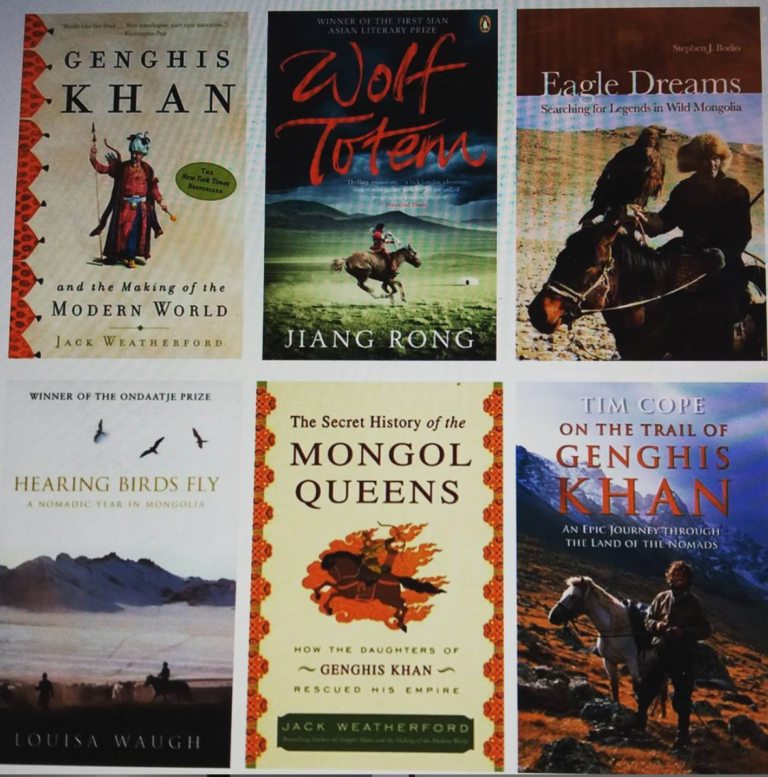
I often travel with some historical context rattling around in my head. Jack Weatherford’s Genghis Khan and the Making of the Modern World was one of the books I read early on — and remains one of the best books I have read about Mongolia. There are now many more books on Chinggis Khan and the Mongol Empire on my shelves, but I still find myself looking across these landscapes and trying to imagine them eight hundred years ago, much as Weatherford described them.
But that isn’t actually what I remember most clearly about this particular visit to Ondorkhan.
I remember the karaoke.
We had reached town with an increasingly bitter wind following us across the steppe. After several days outside, Ondorkhan offered warmth, electricity and somewhere to go for dinner.
That evening we walked through the centre of town and spent some time around the main square.
Provincial squares in Mongolia come alive in the evening. Children race around. Teenagers gather in groups. Older people sit and talk. Someone is usually eating an ice cream, regardless of how cold it is. As an international visitor, you can also become part of the entertainment.
Students would come over to practise their English or simply ask where we were from and what we were doing there. These encounters were rarely dramatic. Just ordinary conversations in an ordinary town. And perhaps because of that, they have stayed with me.
A local woman we met recommended a restaurant called Och, so that is where we went for dinner. Somehow dinner then turned into karaoke. This is not especially unusual in Mongolia, where karaoke is taken seriously and even an average Wednesday work night can somehow turn into a full-on party.
Unfortunately, my contribution to the evening was not of a standard that deserved to be taken seriously at all. Turuu can actually sing, which is always slightly irritating as it highlights the limitations of the rest of us. I seem to remember attempting Bridge Over Troubled Water. This was followed, for reasons I can no longer explain, by Gloria. Neither performance improved with enthusiasm.
At some point we moved from karaoke to the restaurant’s disco floor. There was dancing. There was more singing. There was nobody else there. For a couple of hours, Öndörkhan was rock and roll. Or at least our version of it was.
We had an early departure the following morning. A very early departure. A 4am departure.
The idea was to reach Ulaanbaatar in time to get to Naran Tuul, the city’s sprawling market, as it opened to help beat the city’s endless traffic. From Öndörkhan we followed Mongolia’s main east-west road back towards the capital. But, even on one of the country’s major roads, there were stretches where we saw more birds of prey than vehicles.
Turuu had been so cautious with our timings — as is his way — that we reached Naran Tuul far too early. After driving through the dark for hours, we ended up sitting in the car park waiting for the market to open. We were even too early for the first khuushuur stands, which felt particularly unfair because a freshly made hot khuushuur with a generous splash of chilli or Maggi sauce can make almost any early start feel worthwhile.
Still, traders slowly began arriving. Vehicles pulled in. Doors opened. Boxes appeared. Stalls began taking shape. And we sat there watching the day begin.
It was hardly a great travel moment in the conventional sense. There was no dramatic landscape. No famous monastery. No carefully planned experience. Just a cold car park in Ulaanbaatar after a 4am start.
But these are often the moments I remember. The provincial museum with its erratic opening hours. Students practising their English in a town square. Bad karaoke. An empty disco floor. Birds of prey beside the main road. Watching Naran Tuul slowly wake up.
They are not necessarily the reasons someone chooses to travel to Mongolia. But after all these years, I think they are a large part of the reason I continue to enjoy travelling through it. Because, the places in between are still part of the place.